Thank you for contacting SPARKOVS. We will get back to you shortly.

Operational Intelligence. Powered by AI.

Helping leaders improve operational performance through intelligent systems, process visibility, and practical AI adoption.

ABOUT SPARKOVS

SPARKOVS is a platform dedicated to Operational Intelligence, exploring the intersection of Operational Excellence, Quality 4.0, Artificial Intelligence, and Organizational Performance.Through practical insights, professional resources, and AI-powered tools, SPARKOVS helps leaders improve visibility, decision-making, and operational effectiveness in an increasingly complex business environment.

About the founder

Dr. Sam Nassif is an Operational Intelligence and Performance Leader with more than 20 years of experience in operational excellence, quality management, organizational performance, and business transformation.He holds a PhD in Quality Management and shares practical insights to help leaders improve performance through intelligent systems, disciplined execution, and data-driven decision-making.

THE SPARKOVS APPROACH

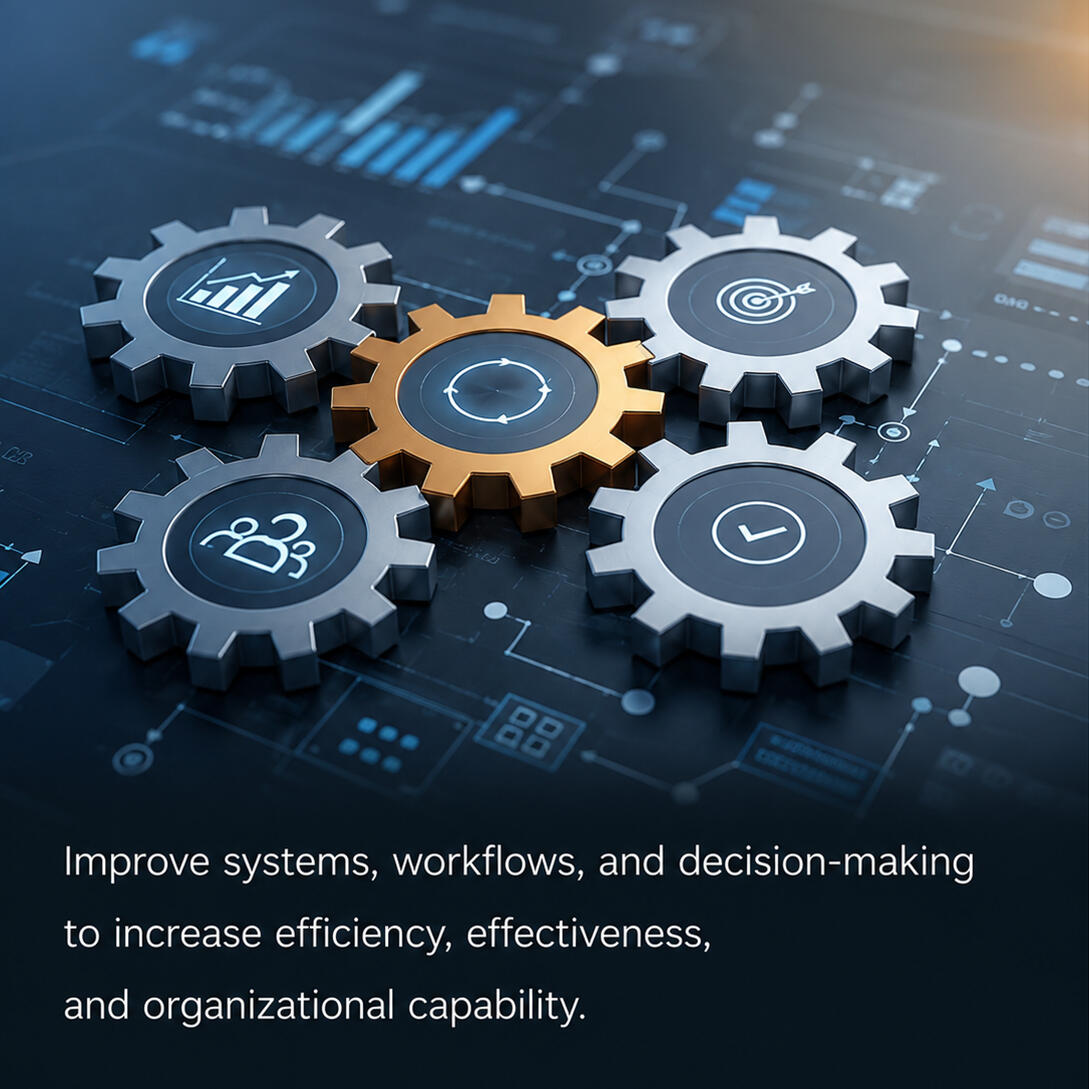
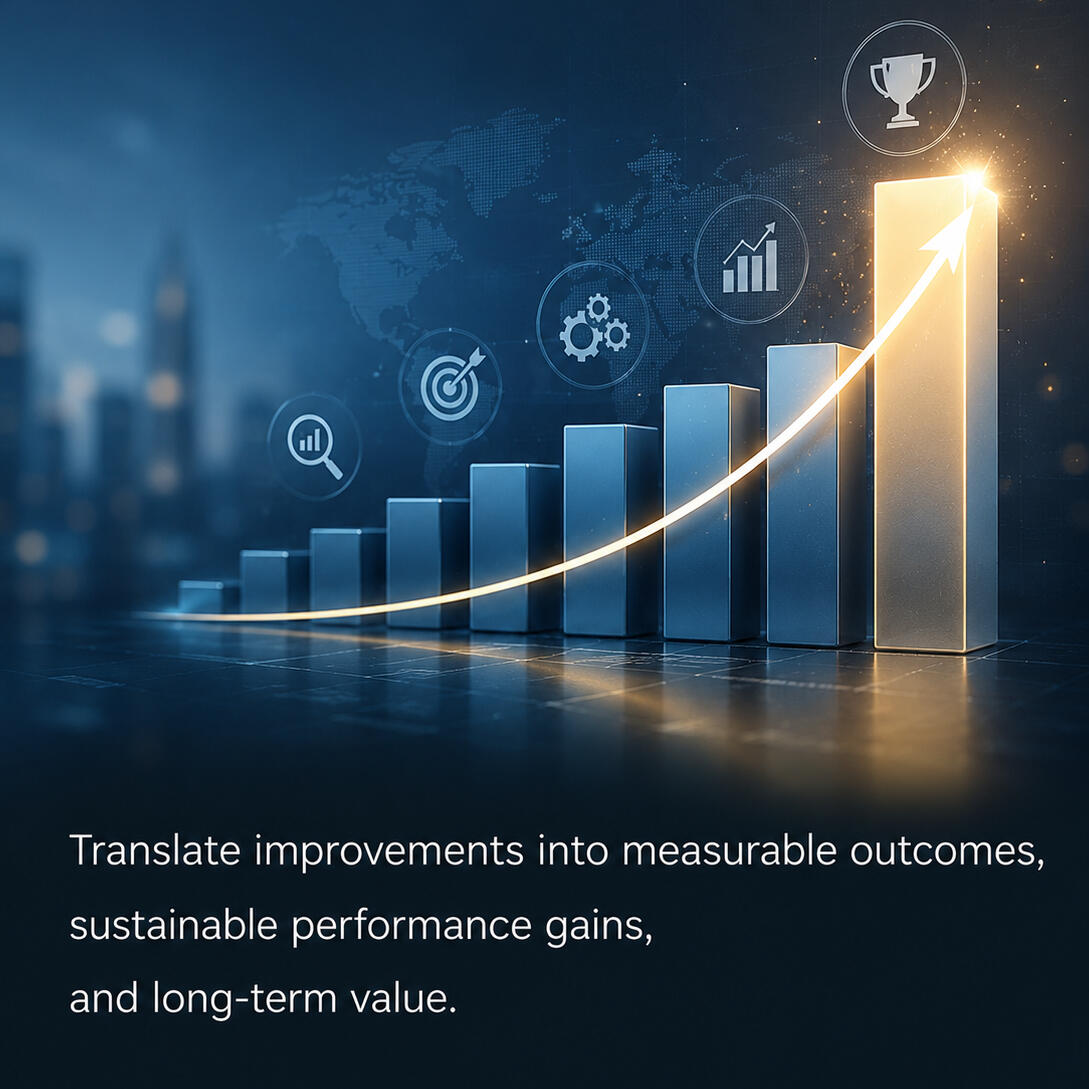
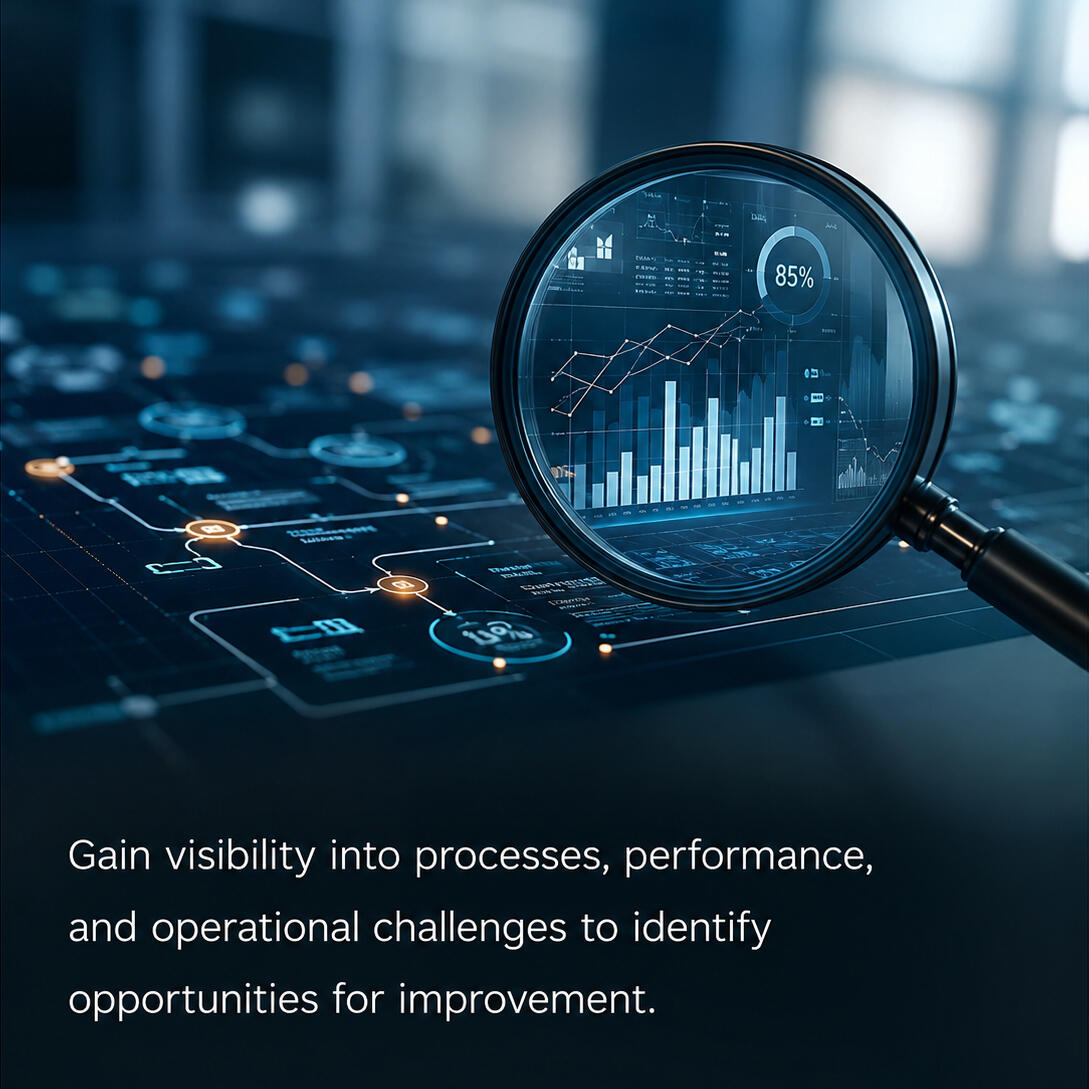
A practical framework for improving organizational performance through Operational Intelligence, Operational Excellence, and intelligent decision-making.SPARKOVS helps organizations understand challenges, improve operational effectiveness, and translate improvement efforts into measurable business outcomes. The framework is built around three interconnected pillars: Analyze, Optimize, and Realize.
Insights

Practical perspectives on Operational Intelligence, Operational Excellence, Quality 4.0, Artificial Intelligence, and Organizational performance.

Artificial Intelligence (AI) will not fix broken processes, but it will expose them.

For decades, organizations have invested heavily in technology to address operational inefficiencies. Today, many are placing the same expectations on Artificial Intelligence (AI).

After years of working across operational environments, one pattern continues to stand out:
AI and other technologies rarely transform poor processes; more often, they magnify the problems that already exist.

When procedures are unclear, ownership is ambiguous, and variation becomes the norm, AI does not create excellence; it simply accelerates the consequences.

In quality management, automation without process discipline simply produces errors faster, and AI is no exception. So before asking the big question, “How can we implement AI?”, leaders should be asking:

“Are our processes stable enough to support intelligent automation?”

Operational maturity is no longer optional; it is the foundation upon which effective AI adoption depends. The real competitive advantage will not belong to organizations that adopt AI the fastest, but to those that have prepared their processes most effectively.

Technology amplifies whatever system already exists. Leaders should pause and ask:

“What exactly are we about to amplify?”

#OperationalIntelligence
#OperationalExcellence
#ArtificialIntelligence
#Quality40
#BusinessTransformation

Most operational problems do not begin as performance problems. They begin as visibility problems.

Over the years, I have seen organizations invest significant time and resources trying to improve performance, only to discover later that the real challenge was a lack of visibility into what was actually happening.

Processes rarely fail overnight.

A delay appears here, a workaround develops there, a little more rework becomes accepted, and decision-making slows down. Individually, these issues may seem insignificant. Collectively, these began to affect performance.

The difficulty is that many organizations do not recognize the problem until it appears in reports, dashboards, or customer complaints. By then, the issue has often existed for some time.

This adds up to why operational visibility matters.

Not because it provides more data, but because it enables leaders to identify patterns before they become problems.

In my experience, improvement becomes far more effective when organizations can clearly see how work flows, where variation is increasing, and where performance is beginning to drift.

The question is:

How much of what happens inside our organizations do we truly see before it affects performance?

#OperationalIntelligence
#OperationalExcellence
#Quality40
#ArtificialIntelligence
#BusinessTransformation

Everybody wants results. Nobody wants consistency.

A thought crossed my mind at the gym recently.

The more I thought about it, the more I realized it applies not only to fitness, but also to our personal lives and even to business.

We often get bored with the process before the process has a chance to work.

We change direction.

We try something new.

We look for a better method.

A faster shortcut. A different approach.

Then a few weeks later, we do it again. And then we wonder why the results never come.

What if the problem is not the method?

What if the problem is that we never stay with the method long enough to find out?

I have noticed that many people and organizations are willing to change. Far fewer are willing to stay consistent.

Yet consistency is often where the real progress happens. Not in the exciting beginning. Not in the constant adjustments. But in the repeated actions that nobody talks about.

Maybe results are not as complicated as we make them.

Maybe consistency deserves more credit than we give it.

What do you think?

#Leadership #OperationalExcellence #ContinuousImprovement #PersonalDevelopment #SuccessMindset

I heard a simple statement recently:

"When the trust is high, the cost is low."

At first, I thought of it as a leadership idea.
The more I reflected on it, the more I started seeing it as an operational one.

Throughout my career, I have spent a lot of time helping organizations reduce the Cost of Poor Quality. We look for defects, rework, delays, inefficiencies, and waste because we know they all carry a cost.

What we rarely talk about is the cost of low trust.

When trust is missing, more approvals appear.
More meetings get scheduled.
More reports are requested.
More people are copied into conversations.
More time is spent checking, following up, and making sure things are being done.

Most of these actions are introduced with good intentions.
Yet over time, they create friction. And friction has a cost.

Not always a financial cost that appears in a report, but a cost in time, speed, energy, and collaboration.

Looking back, some of the most effective teams I have worked with were not necessarily the teams with the most controls. They were the teams with the highest levels of trust.

People trusted each other to deliver. They trusted each other to communicate.
They trusted each other to do the right thing when nobody was watching.

Perhaps trust is more than a cultural value.

Perhaps it is one of the most overlooked drivers of organizational performance.

#Leadership #Trust #OperationalExcellence #OrganizationalPerformance #ContinuousImprovement

Completing my PhD reinforced something I had observed throughout my career, but perhaps never fully appreciated:

Experience and learning are not the same thing.

For many years, I believed that experience naturally leads to expertise. The longer we work, the more we learn. The more projects we complete, the better we become.

Today, I am not so sure.

I have come to realize that experience alone does not guarantee learning. Sometimes, it simply means repeating the same patterns, assumptions, and ways of thinking over and over again.

What transforms experience into learning is reflection.

It is the willingness to question what we already know, challenge our assumptions, and remain open to new perspectives, even after years of practice and success.

Ironically, one of the most valuable lessons I gained from completing a PhD was not learning how much I know. It was realizing how much there is still to learn.

Perhaps expertise is not about having all the answers.

Perhaps it is about continuing to ask better questions.

#Leadership #Learning #ProfessionalDevelopment #OperationalExcellence #ContinuousImprovement

CONTACT US

Interested in collaboration, advisory support, or speaking engagements?

SPARKOVS

Operational Intelligence. Powered by AI.

© 2026 SPARKOVS. All Rights Reserved.